
Many organisations invest significantly in systems integration, only to treat these connections as background infrastructure once they go live. The result? Integration projects that deliver initial stability but fail to capture ongoing value, improve efficiency, or adapt to changing business needs. Industry research shows fewer than 50% of integrations deliver sustained business value beyond year one.
Real integration success isn't just about keeping systems talking—it's about continuously optimising those connections to drive measurable business outcomes. In an era where 70% of AI projects fail due to disconnected data rather than poor technology, the ability to evolve and optimise integrations has shifted from nice-to-have to strategic imperative.
Why Business Continuity Alone Isn't Enough
The baseline expectation for any integration is stability. Systems must communicate reliably so that information flows without interruption. Business continuity ensures this foundation by providing resilience against failures or disruptions. It's essential, but it's just the starting point.
Stopping at continuity means missing the bigger opportunity. Integrations have the potential to streamline approvals, automate workflows, and eliminate duplicated data entry. They can surface insights previously hidden in silos and enable faster, more informed decisions. Approvals that once took 48 hours can be completed in six hours. Reports that previously required hours to assemble can now be generated instantly. Inventory forecasting that relied on week-old data can now draw from real-time information across multiple systems.
Why Integration Matters for AI
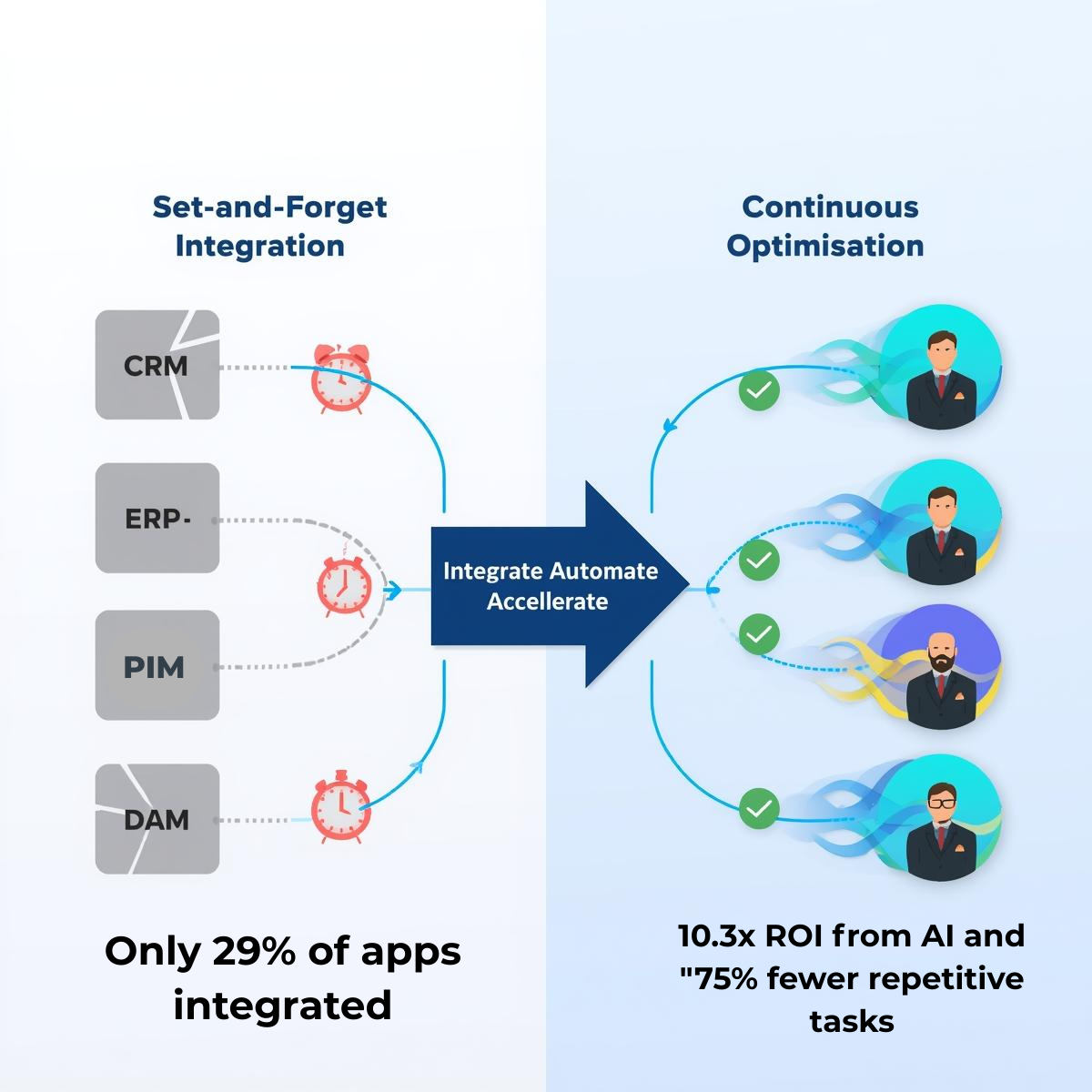
In the age of AI, this distinction matters even more. AI initiatives require clean, connected, and continuously flowing data. Organisations that optimise their integrations aren't just improving current operations—they're building the AI-ready foundation that makes intelligent automation possible and sustainable. IDC's 2025 research reveals companies with strong integration capabilities achieve 10.3x average ROI from AI initiatives—nearly three times better than those with poor connectivity. Yet the average organisation has only 29% of its enterprise applications integrated, despite running nearly 900 different systems. When enterprise systems like ERP, CRM, and content management platforms are fully integrated and continuously refined, automation extends beyond simple execution to enable predictive insights and informed decision-making.
From Static Infrastructure to Living Systems
By treating integrations as living systems rather than static infrastructure, organisations shift from 'just keeping things running' to genuine integration optimisation. This shift creates tangible integration ROI: improved productivity, stronger governance and compliance, and operational efficiency through automation. Continuity protects you; optimisation moves the business forwards.
Measuring the Value of Integrations in Day-to-Day Operations
Value becomes visible when you compare before and after. Start by examining life before implementation, then look at what's happening today.
Before integration:
- Which processes were manual, slow, or error-prone?
- Where did staff waste time on duplicated data entry?
- What decisions were delayed by waiting for information?
After integration:
- Where are time savings, accuracy improvements, or cost reductions visible?
- Which workflow bottlenecks have disappeared?
- What new capabilities have emerged?
The focus should be on outcomes, not technical activity. If staff once spent hours transferring data between platforms and now complete the task in minutes, that's measurable ROI. Research shows organisations can eliminate up to 75% of repetitive IT tasks through effective integration. If duplicated records caused compliance risks and are now resolved automatically, governance and compliance improve. If customer service teams previously needed to check three systems to answer a query and now see unified data in one view, response times drop and satisfaction rises.
For larger organisations, reporting dashboards can track KPIs and demonstrate integration ROI to executives. Metrics might include:
- Reduced transaction processing times (e.g., order-to-fulfilment cycles shortened by 40%)
- Increased throughput in supply chain systems
- Higher data accuracy (e.g., eliminating 95% of manual entry errors)
- Faster approval cycles across departments
For smaller organisations, value often shows up in practical benefits: eliminating a workaround, removing a step from a workflow, or freeing staff to focus on strategic work rather than data wrangling.
These assessments ensure that data integrations remain tied to business goals rather than becoming forgotten background infrastructure. Stakeholders want to see that their investment delivers results; regular outcome measurement makes that visible and actionable.
Starting Smart: Three Principles for Integration Excellence
Successful integration optimisation follows three essential principles that guide both initial implementation and ongoing improvement:
Start Small Focus on clear, achievable projects that prove value and build momentum. Choose a specific pain point—perhaps a workflow that requires manual handoffs between systems—and solve it well. Early wins demonstrate capability and secure stakeholder support for broader initiatives. Just as AI needs time to deliver meaningful results, integration optimisation benefits from focused scope and measurable outcomes.
Stay Flexible Design systems that evolve through testing, feedback, and iteration. The most effective integrations aren't locked into rigid specifications but adapt as business needs shift. Build in review cycles from day one. Plan for changes in data volumes, new system versions, and emerging use cases. Platforms like SiPHON are purpose-built for this flexibility, enabling rapid adjustments without complete rebuilds.
Know Your Data Data quality determines integration outcomes. Understand where information originates, how it connects across systems, and whether it's structured for reliable automation. Before connecting systems, audit data accuracy, identify gaps, and establish governance. Clean, well-structured data flowing through optimised integrations creates the foundation for intelligent automation and eventual AI enablement.
These principles form the framework for sustainable integration success, allowing organisations to test ideas safely, measure impact quickly, and scale intelligently.
Common Integration Mistakes That Limit Value
Even well-intentioned integration projects can fall short. Three common mistakes often derail long-term value:
Set-and-Forget Mentality Treating go-live as the finish line rather than the starting point for optimisation. Integrations exist in dynamic environments. Systems update, business processes change, data volumes grow, and user needs evolve. Organisations that assume integrations will simply keep working without attention find themselves with brittle connections that break at the worst possible times or fail to deliver expected efficiency gains.
Measuring Activity Instead of Outcomes Tracking uptime percentages and sync frequencies matters for operations, but business leaders care about time saved, errors eliminated, and decisions accelerated. An integration with 99.9% uptime that doesn't reduce manual work or improve decision quality isn't delivering value—it's just functioning. Shift measurement focus to business impact: faster approvals, reduced costs, improved compliance, or enhanced customer experience.
Separating Integration from AI Strategy Building integrations that solve today's problems without considering tomorrow's AI opportunities creates technical debt that slows innovation. AI thrives on structured, connected data flowing freely across systems. Integrations built without this future state in mind often require expensive rework when organisations are ready to implement AI capabilities. Design with AI-readiness in mind from the start, even if AI adoption is years away.
Continuous Improvement and Integration Optimisation in Practice
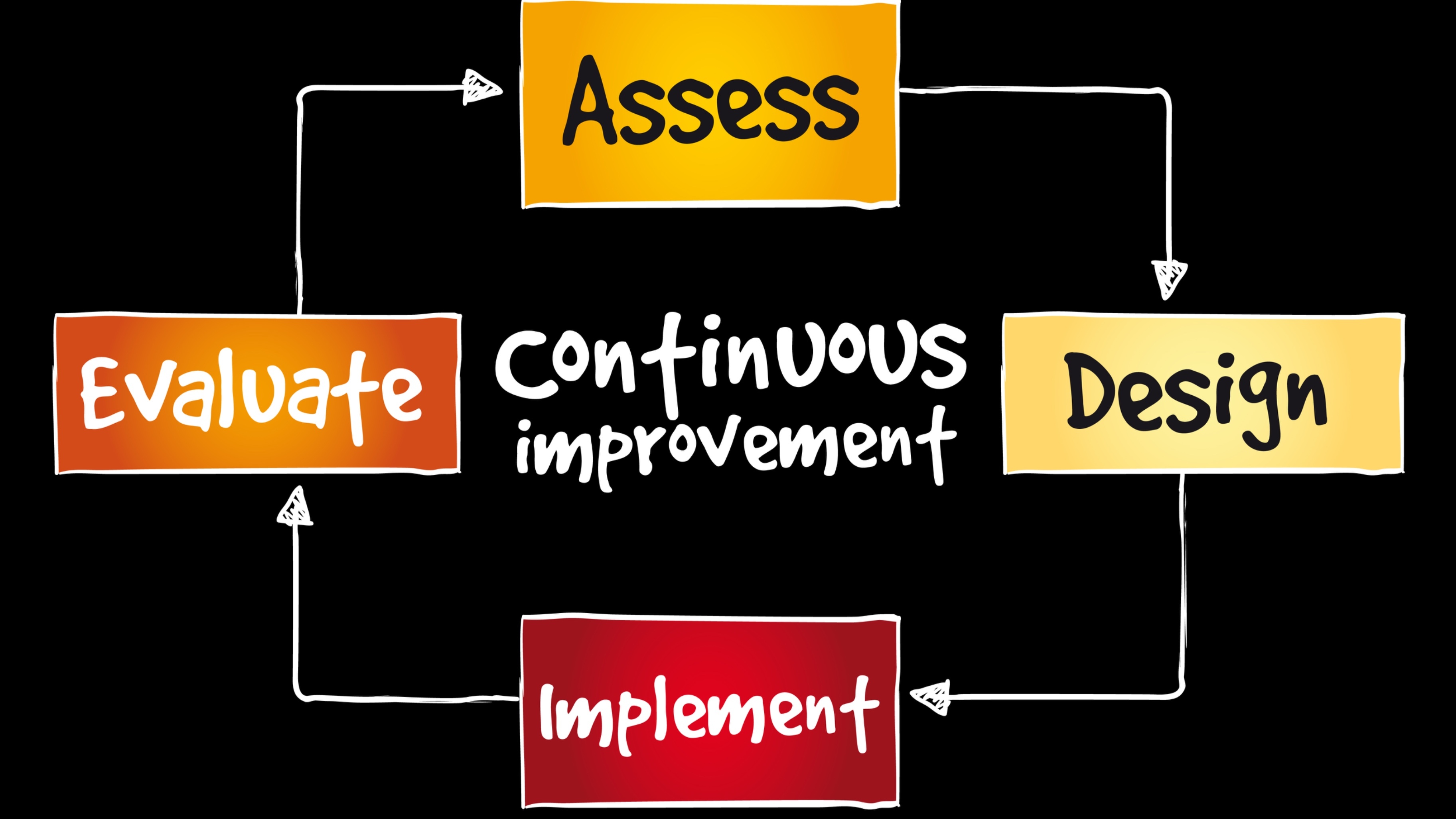
Go-live should mark the beginning of a continuous improvement cycle, not the end of an integration project. The most effective way to manage this is by embedding short, regular reviews into business-as-usual operations. A fifteen-minute catch-up every fortnight is often enough to capture user feedback and identify opportunities for quick wins.
Areas to Focus On:
Workflow Refinement Streamline steps that still feel manual or clunky. Users often develop workarounds for integration gaps that seem minor but accumulate into significant time drains. These workarounds signal opportunities for improvement. Perhaps an integration successfully transfers data but requires users to manually verify certain fields. A small enhancement to include validation rules could eliminate this step entirely.
Performance Tuning Address issues like slow synchronisation or high system load. Integration performance can degrade over time as data volumes grow or system usage patterns change. Regular monitoring identifies these trends before they impact user experience. Optimising query efficiency, adjusting sync schedules, or upgrading infrastructure keeps integrations responsive.
Bottleneck Analysis Spot process slowdowns caused by integrations, revealing previously hidden inefficiencies. Sometimes integrations expose underlying process problems that weren't visible when work was manual. A newly integrated approval workflow might reveal that certain decision-makers consistently delay responses, or that approval hierarchies include unnecessary steps. These insights enable process improvements beyond the integration itself.
Importantly, these refinements don't need to be large projects. They can be delivered as incremental updates that minimise user disruption whilst improving efficiency. In many cases, extending an integration to cover adjacent use cases provides significant benefits without major rework. For instance, an integration that successfully syncs customer data between CRM and support systems might easily extend to include order history, dramatically improving support team effectiveness.
This approach represents integration lifecycle management in practice: iterating on solutions so they evolve with business needs. It allows organisations to achieve operational efficiency through automation whilst ensuring systems keep pace with growth, regulatory demands, and changing workflows.
Building a Culture of Continuous Improvement
Beyond technical optimisation, integrations benefit from a culture where feedback and improvement are expected, not exceptional. Working closely with end-users is essential to identifying gaps in real-world use and addressing them rapidly.
Regular conversations with end-users surface pain points that may not appear in system logs but directly affect productivity. A customer service representative might mention that whilst the integration successfully pulls customer data, the format makes it difficult to quickly scan during calls. A warehouse operator might note that whilst inventory syncs reliably, the timing means they're working with data that's several hours old during peak periods.
Small refinements delivered quickly make processes smoother and build confidence in the integration. Over time, this culture ensures that integrations are never static but remain aligned to business objectives and evolving needs. Users shift from passive recipients of technology to active participants in its improvement, creating a feedback loop that drives ongoing value.
Stakeholder Engagement: Turning Technical Success into Business Adoption
Technical success doesn't guarantee user adoption. For integrations to deliver their full value, business users must feel included in the journey, not just presented with finished solutions. This requires clear communication and regular stakeholder engagement, even after initial deployment.
Check-ins with Users Quick discussions allow staff to raise pain points and highlight missed opportunities. These conversations don't need to be formal—a brief chat whilst visiting a department or a quick survey can reveal valuable insights. The goal is making it easy for users to share feedback and ensuring they know their input matters.
Transparency Share changes and celebrate small wins to build confidence in the integration strategy. When users see their feedback reflected in actual improvements—even minor ones—they understand that integrations are living systems, not fixed IT projects. Regular updates about enhancements, upcoming changes, and value delivered maintain visibility and engagement.
Feedback Loops Encourage staff to share ideas and foster a culture where suggesting improvements is welcomed and acted upon. Create simple channels for feedback: a Slack channel, a brief monthly survey, or regular office hours where users can discuss challenges. Make it clear that integration optimisation is an ongoing process where everyone has a role.
Communication isn't just about problem-solving. It's about reaffirming that integrations are a long-term strategy supporting business goals, not a one-off IT project. When users see their feedback valued and implemented, they become advocates who embrace automation and trust integrated workflows in their daily operations.
Organisations that successfully engage stakeholders achieve strong technical team and business goal alignment. This alignment ensures that integrations stay connected to overall digital transformation objectives rather than being viewed as isolated technical systems running in the background.
Business Continuity: The Essential Foundation
Whilst integration optimisation is where value is created, business continuity remains essential. Every organisation needs safeguards to ensure integrations don't become points of failure. The critical elements include:
Handover to Operations and Support Teams Clear responsibility for monitoring and maintaining integrations ensures someone owns the health of these systems. Document ownership, escalation paths, and routine maintenance tasks. Integrations without clear operational ownership often degrade slowly until a crisis forces attention.
Monitoring and Health Checks Use KPIs, logs, and alerts to detect issues early, before they impact users. Effective monitoring tracks both technical metrics (sync success rates, error frequencies, performance) and business metrics (transaction volumes, processing times, data quality). Automated alerts enable proactive response rather than reactive firefighting.
Change Management Document processes to reduce risks during updates or enhancements. Integration environments are dynamic—systems upgrade, APIs change, and business requirements evolve. Structured change management ensures updates are tested, stakeholders are informed, and rollback plans exist if issues arise.
Incident Response Frameworks Define procedures for minimising downtime and restoring functionality quickly when problems occur. Even well-designed integrations occasionally fail. Clear incident response processes—including communication plans, troubleshooting guides, and escalation procedures—limit business impact and restore service rapidly.
Scaling and Resilience Plan capacity to handle growth or demand spikes. Integration loads rarely stay constant. Seasonal peaks, business expansion, or new use cases can stress systems designed for lower volumes. Build in headroom and monitor trends to scale proactively. Platforms like SiPHON are built with resilience and scaling capabilities, reducing the additional planning and infrastructure management typically required.
These steps ensure integrations remain reliable, secure, and capable of supporting business operations even when challenges arise. Business continuity provides the protective foundation that keeps efficiency gains and optimisation efforts resilient against disruption.
Conclusion
Integrations should be treated as living capabilities that evolve with your business, not static infrastructure that's deployed and forgotten. When actively reviewed, refined, and optimised, they deliver measurable improvements in efficiency, compliance, and decision-making whilst building the foundation for intelligent automation and AI enablement.
By measuring outcomes that matter to the business, embedding purposeful continuous improvement cycles, and engaging stakeholders throughout the journey, organisations ensure their integrations remain valuable and aligned to strategic goals. Business continuity provides the essential protective foundation that keeps these gains resilient against disruption. Together, optimisation and continuity deliver both stability and sustainable growth.
The shift from integration as overhead to integration as strategic advantage requires commitment to ongoing improvement, but the investment pays dividends. Organisations that master this approach don't just connect systems—they build adaptive, intelligent operational foundations that support current needs whilst enabling future innovation
Creative Folks: Building Integrations That Evolve with Your Business
Integration optimisation isn't a one-time project—it's an evolving capability that requires the right expertise, platform, and approach. Creative Folks specialises in Integration as a Service, helping Australian organisations build integrations that deliver measurable value whilst ensuring business continuity and creating AI-ready foundations.
Our SiPHON platform is purpose-built for continuous improvement. Unlike traditional integration platforms that require complex rework for scale, high availability and speed, SiPHON's serverless architecture provides these features instantly, enabling rapid iteration and enhancement without disrupting operations.
We combine deep technical expertise with a business-outcomes focus, ensuring your integrations support strategic goals, not just technical requirements.
Whether you want to optimise existing workflows, build resilience into your integration landscape, or ensure governance and compliance across connected systems, we deliver solutions designed to scale and evolve.
Ready to transform your integrations from background infrastructure to strategic advantage? Book a free consultation to explore how we can help, or visit our Integration as a Service page to learn more about our approach.
Related Blogs
- Building AI-Ready Systems: Integration Strategies for Automation and AI Enablement
- Creative Folks' Next Chapter: Redefining Workflow Automation in the Age of AI
- Phase 1 of the Integration Process: Identifying Opportunities and Challenges
- Phase 2 – Designing & Building the Integration: From Vision to a Functioning Prototype
- Why Would You Ever Outsource Your Data Integrations?
Topics: systems integration, integration services, workflow automation, integration strategy, business continuity, Integration as a Service, continuous improvement, operational efficiency